Sreets Of Madrid -Where Every Alley Tells a Story
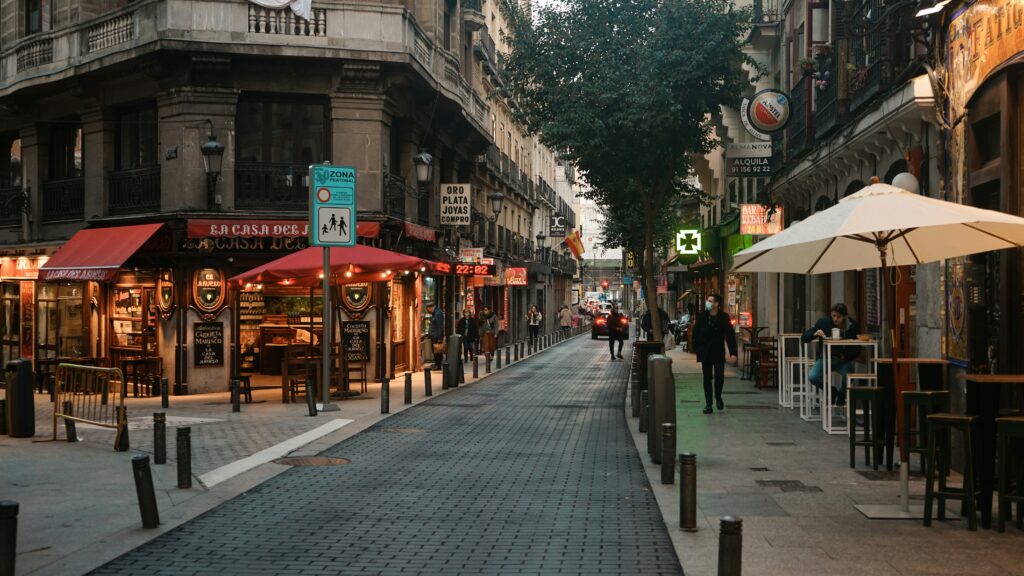
There are cities you visit for monuments, and then there are cities you remember for their streets.
Madrid belongs to the second kind.
The Spanish capital does not seduce travelers instantly like Paris or overwhelm them theatrically like Rome. Madrid unfolds slowly — through late-night conversations on glowing plazas, the sound of heels echoing across stone pavements, the smell of fresh coffee drifting from century-old cafés, and the rhythm of life flowing through its streets long after midnight.
To truly understand Madrid, you don’t simply visit landmarks.
You walk.
Because the real soul of Madrid lives in its streets.
Why Madrid’s Streets Feel Different From Anywhere Else
Unlike many European capitals that feel preserved for tourists, Madrid feels intensely alive.
Its streets are not museum pieces — they are daily stages for:
- Flamenco musicians
- Elderly locals debating politics
- Young artists sketching in cafés
- Families gathering at midnight dinners
- Street performers dancing beneath golden streetlights
Madrid’s energy is not rushed.
It lingers.
The city invites you to slow down and notice details.
The Most Beautiful Streets in Madrid
1. Gran Vía — Madrid’s Beating Heart
Gran Vía is often called Madrid’s version of Broadway.
But beyond the shopping and theaters, Gran Vía tells the story of Madrid’s evolution — from royal elegance to modern urban energy.
At sunset, the glowing rooftops and historic facades transform the avenue into something cinematic.
The best experience?
Walk it at night when neon signs illuminate the buildings and the city feels endlessly awake.
2. Calle de Cava Baja — The Street of Endless Tapas
Hidden within Madrid’s historic district lies Calle de Cava Baja, one of the city’s most atmospheric streets.
This narrow lane is lined with traditional taverns, wine bars, and tapas restaurants that spill onto the sidewalks.
Unlike tourist-heavy dining streets, Cava Baja still feels deeply local.
You’ll find:
- Vermouth bars packed with Madrileños
- Hanging jamón in old taverns
- Candle-lit wine cellars
- Conversations lasting for hours
Madrid eats slowly, and this street proves it.
3. Calle de Alcalá — The Elegant Face of Madrid
Calle de Alcalá stretches through some of the city’s most iconic architecture.
Walking here feels regal.
Grand buildings, historic banks, ornate facades, and old cafés remind visitors that Madrid was once the center of a global empire.
Don’t miss:
- Metropolis Building
- Puerta de Alcalá
especially when illuminated after dark.
4. Calle de Fuencarral — Madrid’s Creative Pulse
Calle de Fuencarral represents modern Madrid.
Street art, independent fashion stores, underground music culture, and trendy cafés give this area youthful energy.
This is where Madrid’s creative generation gathers.
Unlike the polished elegance of central Madrid, Fuencarral feels edgy and expressive.
5. Plaza Mayor — The Street That Became History
Plaza Mayor is more than a square.
For centuries, it witnessed:
- Royal ceremonies
- Markets
- Public celebrations
- Bullfights
- Political events
Today, musicians perform beneath its archways while cafés fill with locals and travelers alike.
Arrive early morning before the crowds, when the square feels calm and timeless.
Hidden Streets Most Tourists Never See
1. Malasaña’s Quiet Alleys
Malasaña is known for nightlife, but its quieter daytime streets reveal another side of Madrid.
Vintage bookstores, old record shops, indie cafés, and faded balconies give the neighborhood artistic charm.
This district once became the center of Madrid’s cultural rebellion after the Franco era.
Today, it remains fiercely creative.
2. Las Letras — The Literary Quarter
Barrio de las Letras was once home to legendary Spanish writers like:
- Miguel de Cervantes
- Lope de Vega
Poetry lines are literally engraved into the streets here.
Walking through the neighborhood feels like wandering inside Spanish literature itself.
What To Eat While Exploring Madrid’s Streets
Bocadillo de Calamares
Madrid’s famous fried calamari sandwich.
Simple, crispy, and perfect near Plaza Mayor.
Churros with Chocolate
No Madrid evening feels complete without thick hot chocolate and fresh churros.
Especially at:
Chocolatería San Ginés
which has served locals since the 1800s.
Tortilla Española
Spanish potato omelet served warm in traditional taverns across the city.
Vermouth on Tap
Madrid locals love afternoon vermouth served straight from the barrel.
It’s less about the drink and more about slowing down.
Best Restaurants & Taverns in Madrid
Sobrino de Botín
Officially considered one of the world’s oldest restaurants.
Famous for roast suckling pig and historic atmosphere.
Even Ernest Hemingway once dined here.
Casa Revuelta
A legendary local spot for fried cod and traditional tapas.
Tiny, crowded, authentic.
Bodega de la Ardosa
Classic vermouth bar with vintage Madrid charm.
Perfect for tapas and local culture.
Stories & Legends Hidden in Madrid’s Streets
The Ghost Stories of Madrid
Many old streets around the city center are tied to mysterious legends and ghost stories.
Locals speak of haunted buildings near:
- Palacio de Linares
- Old convents
- Hidden tunnels beneath the city
Madrid’s nightlife and historic architecture make these legends feel strangely believable after midnight.
Hemingway’s Madrid
Ernest Hemingway fell deeply in love with Madrid.
He described the city as one that stays awake because “nobody wants to go to bed.”
That feeling still exists today.
Madrid’s streets remain alive long after most European cities fall asleep.
Final Thoughts
Madrid is not a city best experienced through schedules or rushed sightseeing.
Its magic hides in:
- Late-night walks
- Quiet alleyways
- Historic taverns
- Echoing footsteps on stone streets
- Conversations that stretch for hours
The streets of Madrid are emotional, imperfect, elegant, noisy, romantic, and endlessly alive.
And perhaps that’s why travelers don’t just remember Madrid —
they remember how Madrid felt.

Leave a Reply